Review: Medical Facebook Cover Design for Embroidery
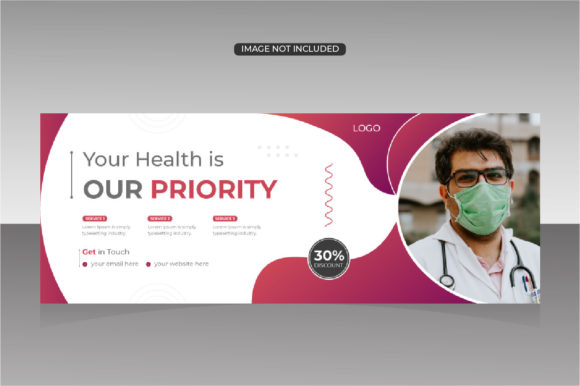
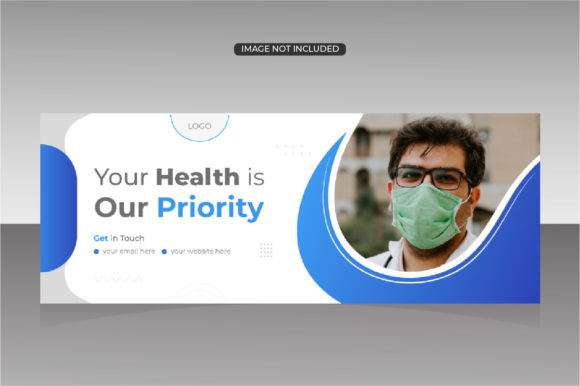
As a designer who has spent years translating digital concepts into tangible, stitched realities, I approach every new machine embroidery design with a mix of curiosity and skepticism. We often see templates marketed strictly as social media assets, yet the visual language of these graphics frequently holds potential for physical products. Today, I am evaluating the Medical Facebook Cover and Banner Design not for its intended use on a screen, but through the lens of an embroidery product reviewer. Can this digital asset translate into a high-quality finished product for a craft business? Let’s dig into the practicalities.
First Impressions and Visual Mood
The initial glance at this Graphics package reveals a clean, professional aesthetic typical of the medical and healthcare niche. The layout is structured, relying on clear lines and symbolic imagery that conveys trust and hygiene. For an embroidery project, this is a double-edged sword. The clarity is excellent for visibility, but the reliance on sharp, digital precision means we must be meticulous when converting these elements into thread.
The mood is clinical yet welcoming, which makes it ideal for personalized gifts or branded merchandise for healthcare workers. However, before you load this into your digitizing software or purchase it as a ready-to-stitch file, consider the stitch density. Digital banners often feature gradients and fine details that do not translate well to thread without significant adjustment. If this design is sold as a vector or raster image within the Websites category, you will need to digitize it yourself, paying close attention to how those smooth curves become satin or fill stitches.
Real-World Application: The Custom Tote Scenario
To test the viability of this design, I imagined a real-life scenario: creating a custom tote bag design for a local nursing school graduation gift. The goal was to create something durable, professional, and visually appealing. Using the motifs from the Medical Facebook Cover and Banner Design, I focused on the central iconography rather than the full banner layout.
On a canvas tote, the bold shapes held up well. The key here is simplification. A Facebook cover is wide and horizontal; embroidery hoops are typically square or rectangular but limited in width. I had to isolate the core medical symbols and reconfigure them to fit a 5x7 inch hoop. The result was a crisp, recognizable emblem that looked far more premium than a printed transfer. Customers reacting to such a handmade product often perceive embroidered items as higher value because of the texture and durability of the thread.
Versatility Across Product Lines
This design concept is not limited to totes. It performs surprisingly well on various substrates if adapted correctly:
- Custom apparel: Ideal for left-chest logos on scrub tops or polo shirts, provided the lettering is enlarged for readability.
- Sweatshirt embroidery: The thicker fabric supports denser stitching, making it perfect for hoodies worn by clinic staff.
- Embroidered patch: Creating a merrow-edge patch allows for portability and application on multiple garments.
- Baby embroidery: Soft pastels derived from the color palette can work for pediatric nurse gifts, though detail must be minimized.
- Holiday embroidery: Incorporating medical themes into holiday cards or ornaments for healthcare heroes.
For Etsy sellers and small shop owners, this versatility is crucial. You are not just selling one item; you are selling a brandable asset that can appear on aprons, caps, and pillow covers. However, always verify if the license permits commercial use of the final stitched item, especially if the source is categorized under general design assets rather than specific embroidery files.
Technical Challenges and Fabric Considerations
While the visual appeal is strong, the technical execution requires caution. Medical designs often include cross symbols, stethoscopes, or heart rate lines. These elements involve sharp angles and thin lines.
Small hoop sizes can distort these details. If you attempt to stitch a complex banner element into a 4x4 hoop, the running stitch outlines may break, or the satin stitch columns may become too narrow to cover the fabric properly. On textured fabrics like terry cloth towels or pique polos, fine details disappear. In these cases, I recommend using a fill stitch background or increasing the line weight significantly during digitization.
Dark fabrics present another challenge. The original design likely uses white or light blue backgrounds. When stitching on navy or black scrubs, you must ensure high contrast. Test your thread colors rigorously. A white thread on black fabric looks crisp, but if the design relies on subtle gray shading, it will vanish. Always create a black-and-white mockup before stitching to check for contrast issues.
Stabilizer and Hoop Selection
Because medical branding implies professionalism, puckering is unacceptable. Use a cut-away stabilizer for stretchy fabrics like performance scrub materials. For woven cottons used in kitchen towel or apron projects, a tear-away may suffice, but only if the stitch count is low. Always check the hoop size compatibility. If the design is large, consider splitting it or reducing the scale to maintain stitch integrity.
Enhancing Brand Consistency and Trust
For boutique branding, consistency is key. Using a cohesive design like the Medical Facebook Cover and Banner Design across your social media and your physical products creates a powerful brand identity. When a customer sees the same clean lines on your Instagram banner and their embroidered tote bag, it builds trust. It signals that you are a serious creative entrepreneur who pays attention to detail.
This level of professionalism increases buyer engagement. Handmade items that look polished and deliberate command higher prices. Whether you are selling digital embroidery file adaptations or finished goods, the perceived value rises with the quality of the stitch-out.
Practical Designer Notes
Before committing to a large production run or listing this as a new product, follow these steps:
- Test on scrap fabric: Never stitch directly on the final garment. Use the same material and stabilizer combination.
- Check thread color contrast: Ensure the design pops against both light and dark backgrounds.
- Review stitch density: High density can cause fabric distortion; adjust pull compensation accordingly.
- Inspect small details: Zoom in on your digitized version. Are there tiny jumps or fragile connections?
- Confirm licensing: Since this originates as a web graphic, ensure you have the right to modify and sell derivatives.
In conclusion, while the Medical Facebook Cover and Banner Design is born in the digital realm of Websites and social marketing, its structural clarity offers a solid foundation for embroidery. With careful digitization and thoughtful material selection, it can elevate a simple custom apparel piece into a cherished keepsake or a professional uniform staple. Treat it not just as a picture, but as a blueprint for texture and form.