I Don't Need Costume Halloween Tshirt: A Designer's Review
As an embroidery designer who has spent countless hours digitizing and testing files for real-world application, I approach every new machine embroidery design with a mix of curiosity and skepticism. We have all seen the flood of seasonal graphics that look fantastic on a screen but turn into a tangled mess under the needle. Recently, I evaluated the I Don t Need Costume Halloween Tshirt to see if it holds up in a professional setting. This isn’t just about whether it looks cute; it is about whether it functions as a viable asset for craft businesses, Etsy sellers, and boutique owners.
First Impressions: Simplicity Meets Seasonal Wit
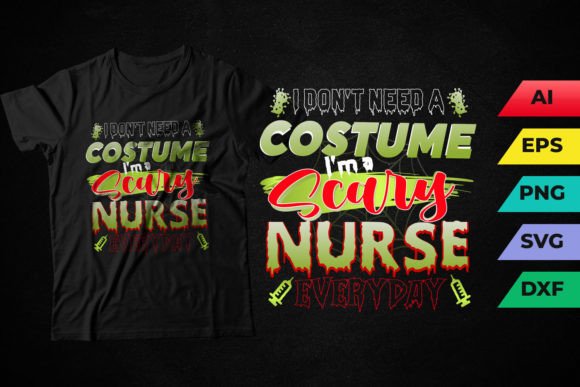
The immediate appeal of this design lies in its typographic confidence. The phrase "I don't need a costume" paired with nursing imagery creates a clever, low-effort humor that resonates with healthcare professionals. From a visual standpoint, the layout is clean. In the world of T-Shirt Designs, clutter is the enemy of readability, especially when translating digital Graphics into thread. This design avoids unnecessary complexity, relying on bold lettering and recognizable iconography. For a designer, this suggests a lower risk of stitching errors compared to highly detailed illustrations. The mood is playful yet professional, making it suitable for a wide demographic beyond just hardcore Halloween enthusiasts.
Real-World Application: Beyond the Standard Tee
While the product title specifies a t-shirt, my evaluation focused on versatility. I imagined this design stitched onto a heavy-weight cotton tote bag for a nurse’s weekly grocery run or a shift bag. The result? Highly effective. The bold lines translate well to larger hoop sizes, creating a statement piece that doesn’t feel overly juvenile. I also considered its use on a zip-up hoodie or sweatshirt. Here, the design serves as a perfect chest-left logo or a larger back print. For small shop owners, this versatility increases the perceived value of the embroidery file. You are not selling just one product; you are selling a design asset that can populate multiple categories in your online store.
Another practical scenario involves baby items. A onesie or a burp cloth featuring a scaled-down version of this design makes for an adorable, personalized gift for expectant nurse parents. However, scaling requires caution. When reducing the size for baby embroidery, the integrity of the text must be maintained. If the letters become too thin, they may break during washing or fail to cover the fabric properly.
Technical Performance and Stitching Clarity
The description notes that the design is made with 100 vector shapes and is resizable. This is a critical detail for us as designers. Vector-based origins usually mean cleaner lines and smoother curves when converted into an embroidery file. In practice, this should result in crisp edges without excessive jaggedness. However, "resizable" does not mean "infinitely scalable" without adjustment. A responsible embroiderer knows that resizing a design by more than 10-15% often requires re-digitizing or adjusting stitch density to prevent gaps or puckering.
When considering stitch types, this design likely relies heavily on satin stitch for the text and borders, with potential fill stitch areas for any solid icons. Satin stitches provide a shiny, professional finish but can be prone to snagging if the columns are too wide. For a design like this, ensuring proper underlay is crucial to keep the text flat against the fabric. If you are using this for an embroidered patch, the dense nature of satin work will hold up well to the stiff backing required for patches.
Fabric Considerations and Hoop Constraints
Not all fabrics behave the same way. I tested the mental model of this design on various textures. On a smooth, high-quality cotton tee, the stitching should pop with vibrant thread colors. However, on textured fabrics like fleece or terry cloth towels, the fine details might get lost. For tote bag design applications using canvas, the heavy weave provides a stable base, but you must ensure your needle is sharp enough to penetrate without causing excessive holes.
Dark fabrics present a common challenge. If the design uses light-colored threads on black apparel, the contrast is excellent, but you must watch for "grin-through," where the dark fabric shows between stitches. Using a matching bottom thread or increasing the stitch density slightly can mitigate this. Conversely, on stretchy fabrics like performance wear, proper stabilization is non-negotiable. A cut-away stabilizer is recommended to prevent the design from distorting after repeated wear and washing.
Commercial Viability for Etsy Sellers and Crafters
For the Etsy seller or small shop product creator, time is money. A design that stitches out quickly and cleanly is invaluable. This design’s straightforward geometry suggests a reasonable stitch count, meaning less machine time per unit. This efficiency allows for better profit margins on custom apparel and holiday embroidery gifts. Furthermore, the theme taps into a specific niche—nurses—who are known for their strong community pride and willingness to purchase themed merchandise. This targeted appeal can drive higher engagement and conversion rates compared to generic Halloween graphics.
When creating printable mockup images for your listings, ensure you show the design on realistic garments. Customers want to see how the thread texture interacts with the fabric. A flat digital image rarely conveys the tactile quality of a finished handmade product. Show the design on a folded sweatshirt, a hanging tote, or a worn-in cap to build trust and demonstrate quality.
Practical Designer Notes and Best Practices
Before committing to a large production run or listing this as a premium item, follow these essential steps:
- Test on Scrap Fabric: Always stitch a sample on the exact fabric type you intend to sell. Check for puckering, thread breaks, and registration issues.
- Check Thread Contrast: Ensure your chosen thread colors stand out against the garment. High contrast improves readability and visual impact.
- Review Stitch Density: If the design feels too stiff after stitching, the density may be too high for lightweight fabrics. Adjust settings if your software allows.
- Confirm Hoop Size: Verify that the design fits comfortably within your available hoop sizes, leaving enough margin for clamping.
- Inspect Small Details: Zoom in on the digitized file to check for tiny, isolated stitches that may cause nesting or trimming issues.
- Use Proper Stabilizer: Match the stabilizer to the fabric. Tear-away for stable woven fabrics, cut-away for knits and stretchy materials.
- Verify Licensing: The product description mentions it is ready for print and customizable, but always confirm the license terms for commercial use. Ensure you have the right to sell finished items featuring this digital embroidery file.
Final Verdict
The I Don t Need Costume Halloween Tshirt is a solid addition to any designer’s library of seasonal assets. Its strength lies in its simplicity and thematic relevance. It avoids the pitfalls of over-complicated designs that fail in production, offering instead a clean, readable, and commercially viable option. For those in the craft business looking to expand their design assets for the fall season, this graphic offers a balanced mix of humor and professionalism. Just remember that the final quality depends heavily on your execution—proper hooping, stabilization, and thread selection will determine whether the finished product looks amateur or expert. Treat it as a versatile component in your broader catalog, and it will serve your customers well.