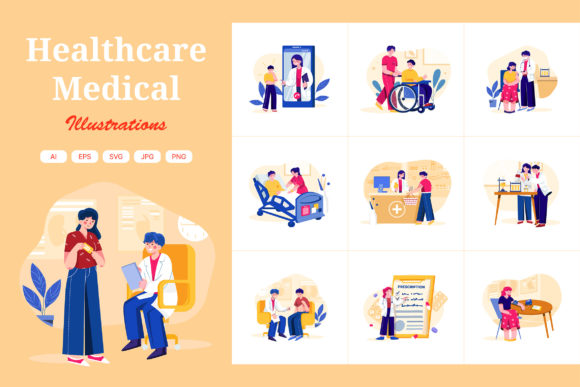
Healthcare Medical Illustration Concept: Graphics and Illustrations
As a digital publisher who has spent over a decade refining the visual identity of high-traffic blogs and editorial platforms, I have learned that the right graphic design asset can make or break reader engagement. When I first encountered the Healthcare Medical Illustration Concept, my immediate reaction was one of relief. In the crowded niche of health and wellness content, finding visuals that strike the perfect balance between clinical accuracy and approachable warmth is notoriously difficult. This asset does not just fill space; it establishes an editorial mood that feels professional yet inviting, educational yet modern.
First Impressions and Editorial Mood
The visual language of this collection leans heavily into clean, modern design principles. It avoids the sterile, cold aesthetic often associated with traditional medical stock photography, opting instead for a style that feels human-centric. For bloggers and content creators, this distinction is vital. When a reader lands on your page, the imagery sets the tone before they read a single word. This concept supports a narrative of trust and clarity. It feels less like a corporate brochure and more like a helpful digital guide, which is exactly the vibe needed for successful content marketing in the health sector.
Whether you are running an affiliate marketing site reviewing supplements or an online educator teaching anatomy, the versatility here is impressive. The illustrations are not overly playful, which preserves authority, but they are not so rigid that they alienate a general audience. This makes them ideal for small business branding where you need to appear credible without being intimidating.
Integrating into Real Publishing Workflows
Let us talk about practical application. As a designer, I do not just look at an image; I look at how it functions within a layout. The Healthcare Medical Illustration Concept is delivered as a comprehensive ZIP archive containing 10 AI files and 10 EPS files. For those of us who live in Adobe Illustrator or similar vector-based software, this is gold. Vector formats mean you can scale these graphics from a tiny social media icon to a massive website header without losing a pixel of quality.
Here is how I would deploy these assets in a real-world publishing scenario:
- Blog Featured Images: Use the cleaner, bolder compositions as the primary visual for article headers. They provide a strong anchor for your headline text.
- Pinterest Pins: The vertical adaptability of these illustrations makes them perfect for creating high-click-through Pinterest graphics. Layer them with bold typography to stop the scroll.
- Newsletter Banners: Email clients can be tricky with heavy images. These vector-based designs, when exported correctly, offer crisp visuals that load quickly and look professional in inbox previews.
- Digital Products and Lead Magnets: If you are creating a downloadable PDF guide, a checklist, or a worksheet, these illustrations add significant perceived value. They transform a plain text document into a polished digital product.
- Canva Templates: While these are native AI/EPS files, you can import them into Canva if you have the Pro feature, allowing you to build reusable templates for your team or clients.
Boosting Content Performance Through Visual Hierarchy
Why does this matter for your metrics? Because visual hierarchy drives user behavior. A well-placed illustration guides the eye. When you use consistent design assets across your category pages, you build brand recognition. Readers begin to associate that specific style of medical illustration with your unique voice. This consistency improves reader trust, which is the currency of the internet.
Furthermore, these graphics support better click-through potential. In a sea of generic stock photos, a custom-feeling illustration stands out. It signals to the user that effort has been put into the presentation, which implies effort has been put into the content itself. For affiliate marketers, this subtle cue can increase conversion rates by reducing bounce rates and keeping users engaged longer.
Strategic Placement and Cautionary Notes
While this asset is powerful, it must be used with intention. It works best in hero images, article thumbnails, and as editorial accents within long-form content. However, there are places where you should exercise caution.
Avoid using these detailed illustrations in small mobile thumbnails where intricate lines might blur or become indistinguishable. Similarly, be careful with text-heavy blog images. If the illustration is too busy, it will compete with your headline rather than support it. Always check contrast and readability. If you place white text over a complex part of the illustration, ensure you use a dark overlay or choose a simpler section of the graphic.
For serious professional niches, such as legal medical consulting or strict corporate healthcare reporting, ensure the style aligns with your brand guidelines. While modern and clean, it may feel too "creative" for ultra-conservative corporate environments. Always preview the asset inside a real blog layout before finalizing your design.
Technical Publisher Notes for Best Results
To get the most out of this digital download, follow these technical steps:
- Test Across Devices: View your exported images on both desktop and mobile screens. What looks balanced on a 27-inch monitor might feel cramped on an iPhone.
- Font Pairing: Try placing these illustrations beside different font styles. They pair exceptionally well with clean sans serif fonts for a modern look, but can also soften the rigidity of traditional serif fonts. Avoid overly decorative script fonts that might clash with the precision of the medical lines.
- File Optimization: Since you are receiving vector files, you control the export. Always compress your images properly for web performance. Large, unoptimized PNGs will slow down your site, hurting your SEO. Aim for a balance between quality and file size.
- Licensing Check: Before using these on monetized websites, affiliate pages, or in paid content products, confirm the commercial license terms provided by the creator. Most creative marketplace assets allow for commercial use, but it is always wise to double-check for specific restrictions regarding resale or trademarking.
In conclusion, the Healthcare Medical Illustration Concept is more than just a set of pictures; it is a tool for better communication. For bloggers, designers, and digital publishers, it offers a way to elevate web design and editorial design simultaneously. By integrating these high-quality vectors into your workflow, you create a more cohesive, trustworthy, and visually appealing experience for your audience. Whether you are building a printable design for patients or a social media graphics campaign for a clinic, this asset provides the professional foundation you need to succeed.